Written by Leslie Ayre-Jaschke for Imagine Citizens Network
How to summarize a wonderful 3-day conference in a few words? Impossible!
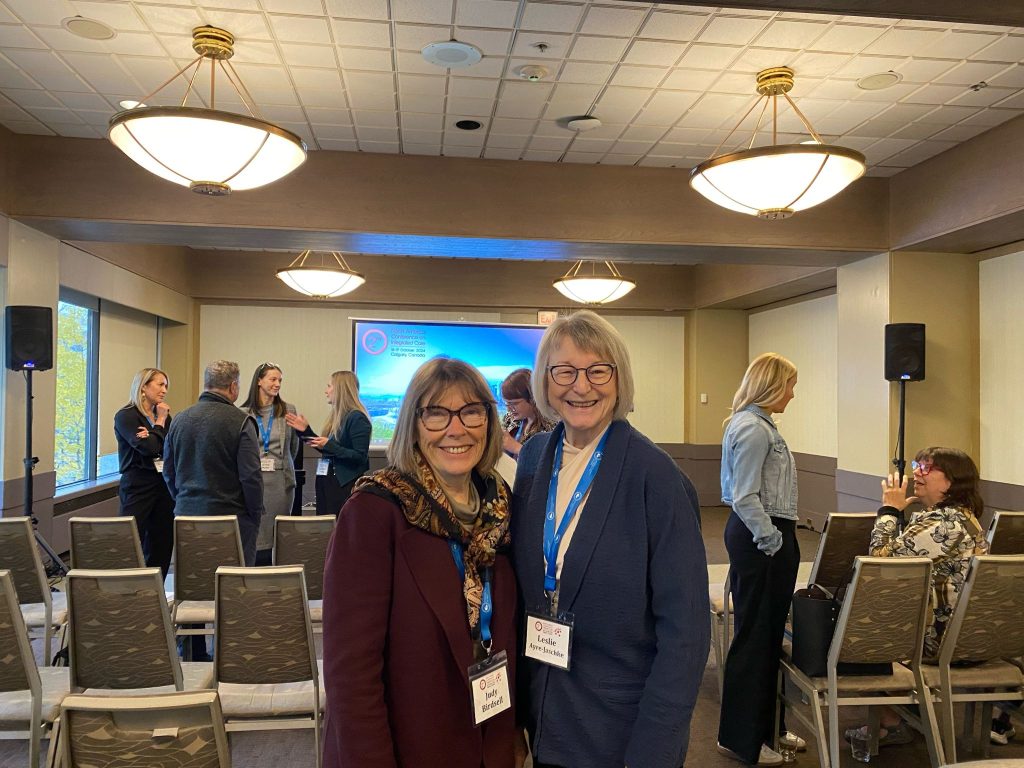
Judy Birdsell and I attended the North American Conference on Integrated Care 2024 (NACIC24) in Calgary in October, representing ICN and co-presenting a networking session.
With over 500 attendees from Alberta, the rest of Canada, the US, and the international community, we gathered to learn about important work related to the conference theme of Creating Health with Integrated Care, to renew old connections, and make new ones. Of note, over 50 patients/caregivers/citizens attended and were featured in the plenaries, sub-plenaries, and sessions.
Day 1
The conference opened with words and smudging from Alberta Elder Harley Crowshoe of the Pikani Nation. Then the first plenary titled Human Level Transformation for Collective Impact challenged participants to think more broadly about health and wellbeing. The keynote speaker, Georgina Black, brought both her 20 years of business plus the experience of caring for her mother with dementia to her talk on Change at the speed of trust: Connecting health and social care in industries. She stated that without social care and wellbeing, there is no health. She provided the audience with four “hacks” to accelerate trust, particularly at the level of organization to organization, where collective impact can be achieved, and encouraged us to think about trust (including relationship building) as a strategy that requires a goal, priorities, and a clear implementation plan.
The plenary also featured a panel of five others who reflected on Ms. Black’s talk and helped participants connect the ideas of how truly integrated care, across sectors, can move us closer to equitable health and wellbeing outcomes.
Later that day, Judy and I hosted our session titled Using patient feedback to improve integrated care through online platform—Care Opinion. As the last session in a long day, our expectations for attendance were low, so we were delighted to have over 20 people, including two ICN board members (Diana Trifonova and Linda Powell), John Sproule, a member of the Care Opinion Canada Implementation Council, other friends of ICN. and people new to us.
The purpose of the session was to introduce Care Opinion Canada as well as ask for ideas to help ICN to implement the new platform. We did a brief presentation about ICN and Care Opinion, which included a live visit to the website. Judy asked how we can see the data generated on the patient-provider experience as a provincial asset. Attendees asked great questions, especially about the user experience, and offered ideas, which will help guide as we continue.
Day 2
Day 2’s plenary “Community Enabled Population Health and Wellbeing” with Drs. Alika Lafontaine and Katharine Smart, past- and present-presidents of the Canadian Medical Association, was powerful and provocative. They recorded their chat for their Health Signals podcast and then invited a panel to comment.
The idea of community-enabled health and wellbeing requires a new shared mental model that involves or empowers a local community to design, deliver, and support health services, rather than rely on traditional healthcare services. This requires community participation, resource sharing, preventive health, and integration with the traditional healthcare system. The themes of trust, collaboration, co-design, power-sharing, relationships, and community ran through this plenary and the whole conference.
The speakers made the statement that healthcare “has lost the plot” and forgotten how to create wellness and health, focusing instead on saving money. A professional earning $150 per hour sees someone in a facility that costs $400 per day and at the end of the day, “you rely on the person at home living with the patient to solve the problem.” (The importance of caregivers and the massive impact this unpaid work has on our economy was brought home many times during the conference.)
In Canada we struggle to accept that our system doesn’t work, but people need to “get riled up and ask for what we need.” We need to re-think, to create health and wellbeing, rather than focus on illness care, to re-centre to community, to unleash creativity through innovation, with some rules on spending, on ways of working, and with constraints about what we want to create. There is an opportunity to move from collapse to an integrated system; from the status quo to flourishing (how do we recognize flourishing?); from institutions to community.
Panelists responded with comments such as feeling hopeful and less lonely by realizing there is a whole global movement toward integrated and more equitable health and wellbeing. That “magic happens in the community. Move from talking about community deficits to community strengths. Why municipalities need to care about health, to help people understand they are sovereign within their community and move funding to help catalyze local community work. Mention of the Abundant Community Edmonton playbook, which helps communities understand how to operationalize and be agents of change. Neighbourhood Leadership/Neighbourhood Connectors Resource Guide
Day 3
The Day 3 plenary, Integrated teams and systems: navigating complexity and change and new models of care, featured Leslee Thompson, CEO of Accreditation Canada and Health Standards Organization (HSO) who spoke about Industry 5.0, the new era of personalization (Industry 4.0 was the digital revolution). This era puts the person at the centre, where we all have the responsibility to help solve the problems of the world. She asked what this means for quality and called for viewing safety far more broadly, for bringing social development goals to our work, for “knowing our why.” The idea that value is created when people are well and that we need to understand value from the perspective of people tied in with other speakers and panelist comments from the previous days.
Over the three days of the conference, Judy and I attended plenaries, sub-plenaries, short presentations, workshops, and networking events that will stay with us in our work with ICN. We heard about phenomenal work in Alberta, about the importance of caregivers and caregiving to Canada’s economy and experienced the energy of a small but mighty group from New Zealand who brought a Māori sensibility to every session they presented or attended.
We attended sessions on health equity, evaluation, and engagement. With so many options, it was a challenge to decide where to go. But it hardly mattered, because every session provided learning and a few ah-ha moments, such as a workshop by the Canadian Red Cross (CRC) that described its work to address social determinants of health through programs as its national “friendly calls” program. The CRC is about more than their better-known work with first aid courses and responding to local and international emergencies as it also works to address the quieter emergencies of loneliness and disconnection.
We appreciated the opportunity to attend the conference and to present about ICN’s exciting work with Care Opinion Canada. Kudos to Judy for designing the networking event and having it accepted as part of the program. Over the coming weeks and months, we will explore connections, explore and share ideas, and learn more about research, projects, and programs we learned about at the conference.